

TruGear FG
Les huiles pour engrenages extrême pression TruGear FG sont formulées à partir d'huiles blanches de première qualité. Ces huiles contiennent des additifs extrême pression, anti-usure et anti-corrosion pour protéger les engrenages, les roulements et les arbres dans une variété de systèmes d'engrenages fermés.
Documents du produit
FICHE PRODUIT
FICHE DE DONNÉES DE SÉCURITÉ
Huile pour engrenages de qualité alimentaire
TruGear FG extreme pressure gear oils are formulated from premium white oils. They contain extreme pressure, anti-wear, and anti-corrosion additives to protect gears, bearings, and shafts in a variety of enclosed gear systems. TruGear FG gear oils are NSF registered as meeting the guidelines of an H1 product for incidental food contact. Learn more about our commitment to lubrifiants respectueux de l'environnement.
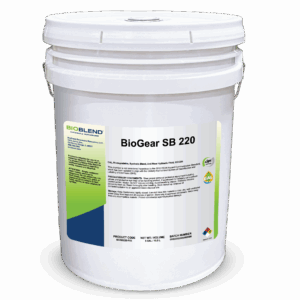
To be used in industrial gear applications primarily in food processing and food packaging plants. TruGear FG gear oils are not designed to biodegrade in the environment should a release occur. For applications that require biodegradability due to regulation or a sensitive environment, please use BioGear SB ou BioGear FS gear oils.
| Attestation | Composés non alimentaires NSF (H1) |
|---|---|
| Caractéristiques | Protection anti-usure, performance extrême pression, lubrifiant de qualité alimentaire NSF H1 |
| Industrie | Manipulation et fabrication des aliments |
| Emballage | Seau – 5 gallons, Tambour – 55 gallons, Fourre-tout – 275 gallons |
| Viscosité | 150, 220, 320, 460, 680 |
Produits similaires


Questions fréquemment posées
What Is Extreme Pressure Gear Oil?
Extreme Pressure (EP) gear oil is a specially formulated lubricant designed to protect gears operating under high loads, heavy shock, or intense pressure conditions. It contains additives that create a protective film on metal surfaces, preventing wear, pitting, and scoring even when metal-to-metal contact occurs. EP gear oils are commonly used in gearboxes, differentials, and industrial machinery where high torque or heavy-duty performance is required.
What Are Extreme Pressure Additives Examples?
Extreme pressure additives are chemical compounds that enhance a lubricant’s ability to withstand heavy loads and prevent surface damage. Common examples include:
- sulfur-phosphorus compounds
- chlorinated hydrocarbons
- organo-sulfur compounds
These additives react with metal surfaces under high temperature and pressure to form a durable, sacrificial film that minimizes wear. Some environmentally friendly formulations use alternative chemistries like borate or phosphate esters to provide similar protection without hazardous components.
What Are the Different Types of Gear Oil?
Gear oils are available in several formulations, each designed for specific operating conditions and performance needs.
- EP (Extreme Pressure): Contains additives that protect gears from wear and scoring under heavy loads, making it ideal for industrial gearboxes, differentials, and other high-stress applications.
- Compounded: Blended with fatty oils or acids to provide excellent lubrication and adhesion, especially in worm gears and applications involving sliding contact.
- Synthetic: Made from chemically engineered base oils that deliver superior temperature stability, oxidation resistance, and extended service life compared to mineral oils.
R&O (Rust and Oxidation Inhibited): Designed for moderate-load applications, these oils focus on protecting against rust, corrosion, and oxidation without EP additives, making them ideal for turbines, compressors, and light-duty gear systems.
 FR
FR  EN
EN