
Environmentally Acceptable Marine Lubricants
Readily biodegradable hydraulic fluids, gear oils, greases and wire rope lubricants for every oil-to-sea interface on your vessel. Fully VGP compliant, ready for the transition to VIDA, and competitively priced, without giving up performance.
Where the regulations stand: VGP today, VIDA next
Since the EPA’s 2013 Vessel General Permit, commercial vessels 79 feet and longer operating in U.S. waters have been required to use Environmentally Acceptable Lubricants in all oil-to-sea interfaces unless technically infeasible. That covers equipment such as stern tubes, thrusters, stabilizers, rudders, deck machinery and wire rope.
The Vessel Incidental Discharge Act (VIDA) is replacing the VGP. The EPA finalized its VIDA discharge standards in September 2024, and the U.S. Coast Guard is developing the regulations that will implement and enforce them. Until those Coast Guard rules are final and in effect, the 2013 VGP remains in force, so the EAL requirement applies today. VIDA carries the same three-part EAL definition forward and explicitly includes hydraulic fluids.
All BioBlend marine products meet EPA requirements to be classified as EALs under the 2013 Vessel General Permit, making them fully VGP compliant. They are also readily biodegradable, minimally or non-toxic, and confirmed water-safe for use on boat equipment.
What makes a lubricant an EAL?
An Environmentally Acceptable Lubricant must meet three criteria. “Biodegradable” alone is not enough.
Facilement biodégradable
Breaks down quickly in the environment under standardized test methods, rather than persisting in the water column.
Minimally toxic
Low aquatic toxicity to fish, invertebrates and algae if a leak or release reaches the water.
Not bioaccumulative
Does not build up in the tissue of marine organisms and move up the food chain.
Marine lubricants by application
Choose by the equipment and the interface it shares with the water. Our team will confirm the right viscosity grade and compatibility for your system.
Deck machinery, cranes & hydraulic systems
- BioFlo Synthétique AW — fully synthetic, readily biodegradable ester hydraulic fluid with high thermal and oxidative stability; classified as an EAL under the 2013 VGP (ISO 32, 46 & 68)
- BioFlo HFDU — FM-approved fire-resistant, natural ester anti-wear hydraulic fluid
- HFDU synthétique BioFlo — FM-approved fire-resistant hydraulic fluid made with synthetic polyol esters
- BioFlo FG — USDA and NSF H1 food-grade hydraulic fluid for fishing vessels and seafood-processing equipment where incidental food contact is possible
Wire rope, cable & winch drums
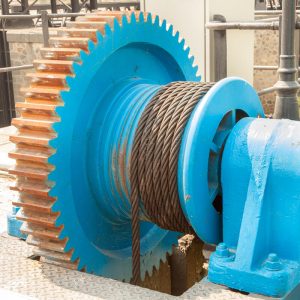
- BioLube WRL XT 46 — readily biodegradable, zinc-free, extra-tacky wire rope lubricant from renewable base stocks
- BioGrease WRG — readily biodegradable natural ester wire rope and cable grease with an aluminum complex thickener and rust inhibitors that resist water washout and fling-off
- BioBlend MPO — readily biodegradable multipurpose lubricant (NSF H1) for wire ropes, cables, slides and open mechanisms
Greased components in wet environments
- BioGrease HDS XT — synthetic, extra-tacky lithium complex grease with rust and corrosion inhibitors, built to resist water washout; meets EAL and LuSC-listed criteria
- BioGrease HD 1 — readily biodegradable, minimally toxic heavy-duty grease with strong water-washout resistance
- BioGrease GP — environmentally acceptable natural-ester general-purpose grease
- BioGrease FS 1 — synthetic ester grease for very low temperatures, moly-free
Gearboxes, open gears & drives
- BioGear FS — fully synthetic ester gear oil for extended drain intervals
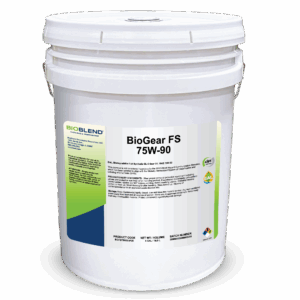
- BioGear FS 75W-90 — readily biodegradable synthetic GL-5 gear lube
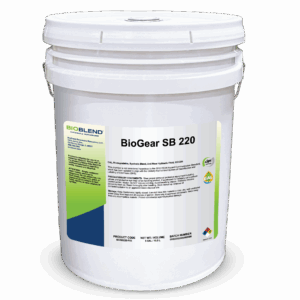
- BioGear SB — natural ester / synthetic blend industrial gear oil (ISO 150 & 220, AGMA 9005-E02)
- BioFlo FS TO-4 — full synthetic heavy-duty transmission fluid for severe environments
- BioGrease OG — readily biodegradable open gear grease for heavy loads at slow speeds in wet environments
Maintenance, tools & marine construction
- Bon de commande BioBlend — readily biodegradable penetrating oil and general-purpose lubricant
- BioBlend ES RDP — eSyn-certified heavy-duty lubricant for pneumatic tools and drilling equipment
- BioLube CFR — readily biodegradable concrete form release for a void-free surface
Prefer a printable overview? Download the BioBlend marine brochure.
Stern tubes, thrusters and controllable-pitch propellers? These systems often have OEM-specific requirements. Talk to our team about your equipment and we’ll recommend a compatible EAL.
Built for the vessels and operations that work the water
Switching to EALs: how the conversion works
Map your interfaces
Identify every oil-to-sea interface and the lubricant currently in it.
Check compatibility
Confirm seal, hose and paint compatibility and any OEM requirements for each system.
Drain & flush
Minimize residual conventional oil so the new fluid performs as intended.
Monitor
Use oil analysis during the first service intervals to confirm condition and set drain intervals.
Performance without the compromise: eSyn™
Every BioBlend marine product is developed through eSyn™ (Environmental Synergy), our formulation and testing approach built around three requirements: environmental responsibility, effective performance equal to or better than conventional counterparts, and economic value. BioBlend marine products are priced competitively with conventional, non-biodegradable counterparts, and because they are formulated from natural ester and synthetic blends that last longer than petroleum, they could actually reduce maintenance costs over time.
 BioBlend is also an official Green Marine partner, supporting vessel operators, ports and marine facilities working to go beyond regulatory compliance.
Marine EAL FAQs
Does VIDA replace the Vessel General Permit?
Yes. The EPA finalized its VIDA discharge standards in September 2024, and the U.S. Coast Guard is developing the implementing regulations. Until those regulations are final and in effect, the 2013 VGP, including its EAL requirement, remains in force.
Which vessels are required to use EALs?
Under the VGP, commercial vessels 79 feet or longer operating in U.S. waters must use EALs in all oil-to-sea interfaces unless technically infeasible. Many smaller vessels, ports and operators in sensitive waters use EALs voluntarily to reduce spill risk and liability.
Are all biodegradable lubricants EALs?
No. An EAL must be readily biodegradable, minimally toxic and not bioaccumulative. A product can be biodegradable and still fail the toxicity or bioaccumulation criteria.
What is an oil-to-sea interface?
Any piece of equipment where lubricant can come into contact with the surrounding water during normal operation, such as stern tubes, thrusters, stabilizers, rudder bearings, deck machinery and wire rope.
Do EALs perform as well as conventional marine lubricants?
Modern ester-based EALs can match or exceed conventional oils in lubricity, viscosity index and wear protection. Water management and correct changeover matter, which is why we help you plan the conversion.
Can I switch an existing system to an EAL?
In most cases, yes. Confirm seal and component compatibility and OEM requirements first, then drain and flush the system to minimize residual conventional oil. Our team can walk you through it.
Solutions populaires pour la marine








Contactez BioBlend aujourd'hui
Nos experts sont là pour discuter de vos défis uniques pour votre industrie et votre application particulières. Contactez-nous pour savoir comment vous pouvez en toute sécurité et avec succès passer à nos graisses biosourcées hautes performances en remplissant le formulaire ci-dessous ou en appelant le 800-BIOBLND.
« * » indique les champs nécessaires
 FR
 EN